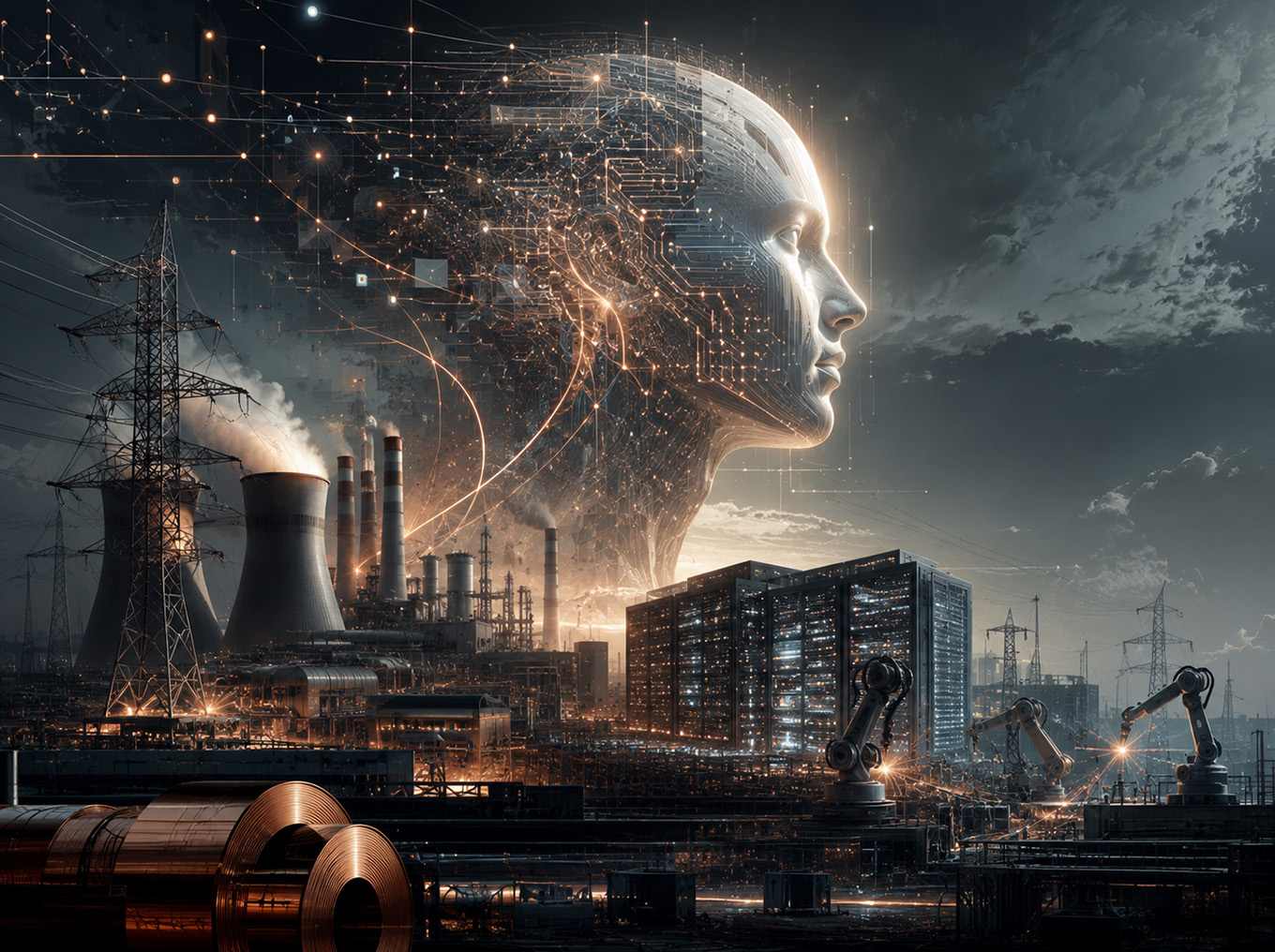
Is AI Deflationary?
New Fed Chairman Kevin Warsh believes AI could become the most powerful disinflationary force in decades, but it's arriving just as the West begins an expensive push to rebuild manufacturing, energy systems and strategic supply chains.
Artificial intelligence is being sold as the next great productivity miracle.
That may prove correct. AI can already perform work that once required teams of analysts, programmers and administrators. As the technology improves, it should lower the cost of many services and allow companies to produce more with fewer people.
In isolation, that is disinflationary, and that’s what Fed Chair Kevin Warsh is banking on. In a recent speech, he said AI would be a disinflationary force, enabling the opportunity to lower rates without stoking inflation.
But AI is not arriving in isolation.
The United States and its allies are also trying to rebuild domestic manufacturing, secure military supply chains, expand electrical infrastructure and reduce their dependence on geopolitical competitors.
That project will require factories, skilled labour, energy, metals, transportation and years of heavy capital spending.
Moving production offshore helped suppress costs for decades. Bringing a meaningful portion of it home is unlikely to have the same effect, at least during the buildout.
This creates one of the most important macroeconomic conflicts of the next decade.
Two Forces Moving in Opposite Directions
The bullish case for AI rests partly on productivity. If machines can perform more cognitive work at lower cost, companies can improve margins and the economy can grow without creating the same level of inflation.
Previous productivity revolutions did exactly that.
Personal computers increased the output of office workers. The internet reduced communication and distribution costs. Globalization and container shipping allowed companies to reorganize supply chains around the lowest-cost producer.
AI may belong in that category.
The difference is that governments are now intentionally reversing part of the global system that made those gains so powerful.
Reindustrialization is not being pursued because it is the cheapest option. It is being pursued because supply chains that look efficient in peacetime can become dangerous during a crisis.
A country that cannot produce enough energy equipment, weapons, medicines, semiconductors or basic industrial inputs has surrendered part of its economic independence.
That realization is changing policy across the Western world.
The Physical Cost of a Digital Revolution
AI also depends on the physical economy.
More capable models require more computing power. That means more data centres, electricity, cooling, semiconductors, grid capacity and raw materials.
Software businesses were once celebrated because they could add customers at very little marginal cost. AI may eventually produce attractive software economics, but the infrastructure supporting it remains expensive.
This is why I am cautious when investors treat every AI business as though it will scale effortlessly.
The technology may be permanent. Today’s valuations are not.
There will be extraordinary winners. There will also be companies that raised enormous sums because they were attached to the right narrative during the strongest part of a capital cycle.
What Investors Should Watch
The question is not whether AI will be productive. It will.
The question is whether those productivity gains arrive quickly enough to offset the inflationary costs of rebuilding industrial capacity, expanding power infrastructure and carrying enormous public debt.
My suspicion is that inflation remains difficult before the productivity benefits become fully visible.
That does not make me bearish on AI. It makes me interested in what AI and reindustrialization both require…
Power generation, electrical transmission, cooling, industrial automation, semiconductors and critical minerals may sit at the centre of both trends.
The applications will attract the attention. The physical buildout may absorb the capital.
In my recent interview with Andy Schectman, we discussed why reindustrialization may prevent AI from producing an immediate return to the low-inflation world investors became accustomed to.

Latest Insights
Recent Highlights from Our YouTube Channel
Comprehensive reviews of current market dynamics and the latest trends influencing the future of investments.