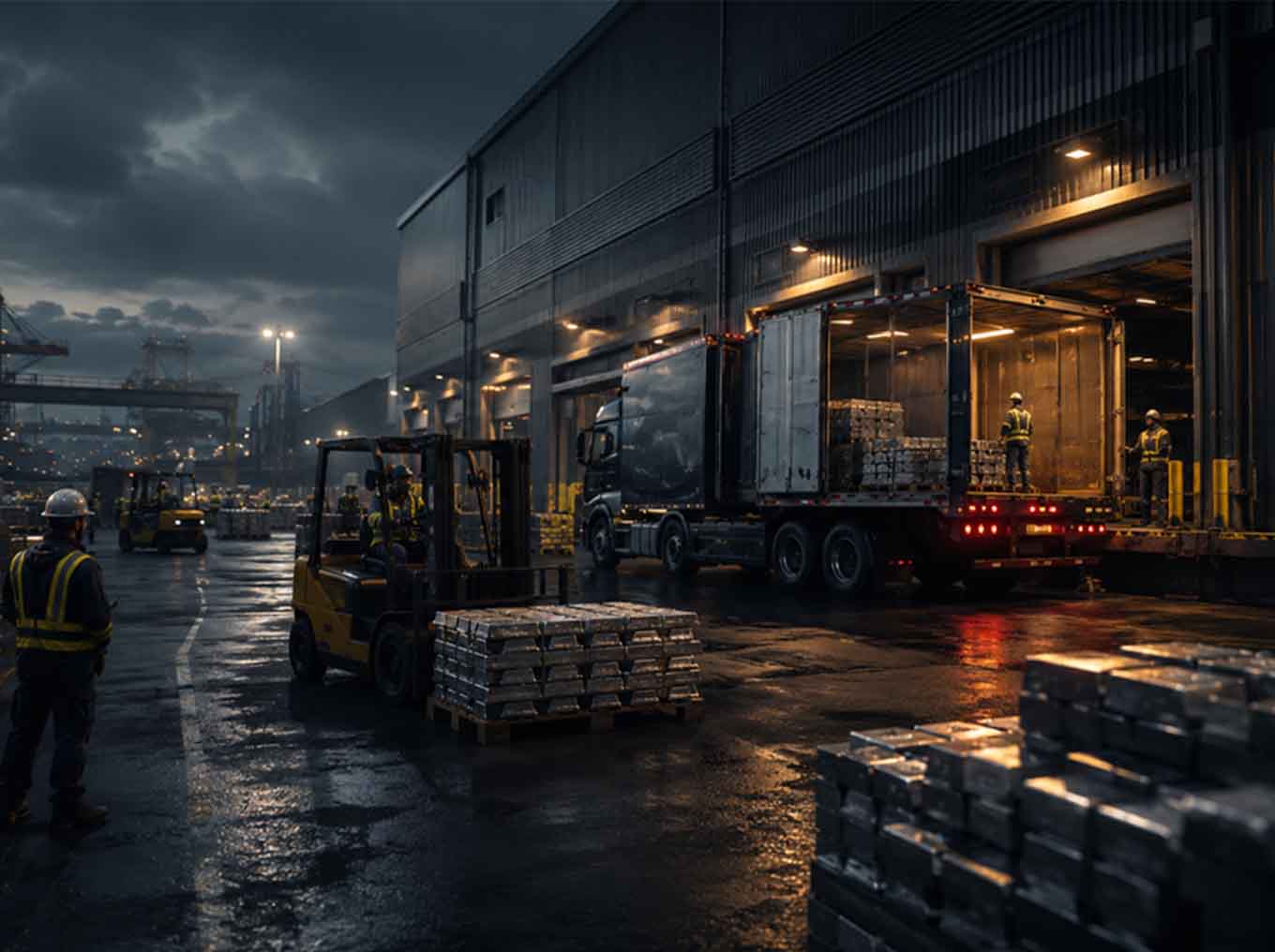
Who Is Draining the Silver Market?
Andy Schectman says silver’s correction may be hiding a major shift in the global silver market as physical silver moves from West to East. This article explores COMEX silver outflows, China silver demand, Shanghai premiums, paper silver markets, physical delivery, precious metals, and what it could mean for investors.
Andy Schectman Warns the Real Silver Story Is Not the Price Crash
Silver investors have seen this movie before.
The chart goes vertical. The headlines get breathless. Retail investors finally begin to care. Then, just when the story feels unstoppable, the trapdoor opens.
The price collapses. Sentiment dies. The same investors who were euphoric days earlier begin asking the question every silver bull secretly fears.
Was that it?
Was the great breakout just another brutal false dawn in one of the most frustrating markets on earth?
That is the question hanging over silver today after one of the most dramatic rallies and reversals in recent memory. After trading near $30 an ounce when Andy Schectman last appeared on the podcast in September 2024, silver exploded to more than $120 an ounce before getting violently knocked down.
For a market with a long history of crushing latecomers, the pullback was enough to revive an old fear. Maybe the bull market is over. Maybe the banks won again. Maybe silver, once again, has become dead money.
But Schectman, President of Miles Franklin, sees something very different. He believes investors are staring at the wrong signal. The price, he argues, is the distraction.
The real story is the flow.
And according to Schectman, that flow may be revealing one of the most important shifts in the global precious metals market in decades.
The Crash That Did Not Change the Story
Silver’s correction looked brutal on the surface. After a massive run, speculative money was flushed out, margin pressure hit, and leveraged products were forced to rebalance.
Schectman argues that the selloff was not driven by a collapse in the underlying silver thesis. Instead, he points to structural pressure in the paper market.
He described a one two punch. First came the rebalancing of exchange traded funds, especially leveraged products that had become distorted after silver’s violent move higher. Then came a sharp increase in margin requirements on COMEX silver contracts.
According to Schectman, margin requirements rose from roughly $15,000 to around $54,000 for the same 5,000 ounce silver contract.
That kind of increase can force selling. Traders who cannot post the additional margin get liquidated. In a market already digesting a major rally, it can turn a correction into a washout.
But this is where the story gets interesting.
While the price was falling, Schectman says physical demand was accelerating.
He pointed to a surge in Chinese silver imports, including February imports that rose 78% month over month, followed by what he described as a record 836 tonnes in March, 173% above the ten year seasonal average. [CITE]
In other words, while Western investors were watching the chart bleed, physical metal was moving east.
That is the contradiction at the heart of Schectman’s argument. If the bull market is over, why are major buyers taking delivery?
The Question No One Is Asking
Schectman kept returning to one question. Who is standing for delivery?
Not who is trading silver. Not who is speculating on price. Not who is buying a few coins or bars after watching a YouTube video.
Who is taking delivery of millions of ounces of physical silver and moving it out of the system?
Schectman pointed to 39 million ounces of silver leaving COMEX in a non delivery month in February. That is not a small number. That is almost 2.9 million pounds of metal.
His point was simple. Moving that much silver is not casual. It requires logistics, insurance, trucks, planning, and enormous capital.
“Who ran logistics for that?” he asked. “Where did it go?”
That question cuts straight through the noise.
Because in Schectman’s view, the most sophisticated players in the world are not watching the same market retail investors are watching. Retail watches price. Institutions watch flow.
And the flow, he argues, is screaming.
He says major players have been standing for delivery month after month for roughly 18 straight months. Billions of dollars worth of physical metal, moving quietly, while public sentiment swings from greed to despair.
To Schectman, that is not random.
“These people do not screw around,” he said.
That may be the most important line in the entire interview.
Because if he is right, silver’s correction was not the end of the move.
Price as Misdirection
Markets are psychological weapons.
They can make investors doubt the very thesis that originally made sense. They can turn conviction into panic. They can make strong hands feel foolish and weak hands feel validated.
That is why silver is so dangerous.
The fundamentals can look compelling while the price action looks terrible. The thesis can strengthen while the chart deteriorates. Physical metal can move into stronger hands while leveraged traders get wiped out.
Schectman believes that is exactly what is happening.
He argues that the world’s largest and best informed buyers are using the weakness in price and the collapse in sentiment as cover to reposition into physical metal.
In his words, the biggest money on the planet may be using “misdirection of price” as an escape hatch to get physical silver.
That is the revelation.
The crash may not be proof that the silver story failed. It may be proof that the market is changing hands. Weak hands sell the chart. Strong hands take the metal.
The East Is Building a New Market
The deeper part of Schectman’s thesis is not just about silver. It is about the global financial system.
For decades, the West has controlled price discovery for precious metals through London and New York. Paper contracts, derivatives, and exchange traded products have allowed enormous metal exposure to trade without requiring most participants to demand physical delivery.
That worked because trust held the system together.
But Schectman believes that trust is eroding.
He points to the expansion of precious metals infrastructure across Asia and the Global South, including vaults, exchanges, and settlement networks tied to Shanghai, Hong Kong, Singapore, Dubai, Mumbai, and other emerging financial centers. [CITE]
In his view, these are not random developments. They are the arteries of a new monetary system.
One where countries increasingly trade in local currencies, settle imbalances in gold, and use physical metal to reduce dependence on the U.S. dollar system.
Gold is already being woven back into the monetary architecture. Silver, meanwhile, sits at the intersection of monetary distrust and industrial necessity.
That makes it uniquely explosive.
It is not just money. It is also technology. Solar panels, electronics, artificial intelligence, high tech weapons systems, and advanced industrial applications all depend on silver.
And unlike gold, much of the silver used in industry is consumed, dispersed, or lost to landfills.
That is what makes the physical market so important.
If available supply tightens, paper promises may not be enough.
China’s Premium and the Arbitrage Machine
One of Schectman’s most explosive points was about the premium in China.
He says China has been posting a roughly 13% premium for silver compared to Western prices for more than a year. [CITE]
If that is accurate, it creates an obvious incentive.
Buy silver in the West. Deliver it into the East. Capture the spread.
Schectman described it as arbitrage. If a trader can move 10 million ounces into the Shanghai network at an $11 per ounce premium, that is potentially $110 million in gross spread before costs.
That kind of incentive can suck metal out of Western vaults.
And if it persists, it raises a bigger question.
Why has the arbitrage not closed?
Normally, large spreads attract capital until the spread disappears. If the premium remains, it may suggest deeper forces are at work. Supply constraints. Delivery frictions. Strategic accumulation. Or a market where physical metal is simply worth more in one part of the world than the paper price suggests.
That is why Schectman keeps coming back to the flow. The price says one thing. The metal says another.
Are the Banks Still in Control?
For silver investors, this is the old question.
Who controls the market?
Schectman believes the West still has influence, but that control is weakening. He sees a quiet tug of war between Western paper markets and Eastern physical demand.
The banks may still move price. But if more players demand delivery, their power changes.
Paper markets work best when almost no one asks for the underlying asset. Schectman said that in his career, less than 1% of contracts typically stood for delivery.
But now, he argues, delivery demand is rising dramatically.
That changes everything.
If a market is built on paper claims, confidence is the foundation. If confidence breaks, the game becomes physical.
And in a physical market, the only question that matters is brutally simple.
Can you deliver?
Why Silver Is Not Copper
One of the most interesting parts of the conversation was the comparison between silver and copper.
Both are industrial metals. Both benefit from electrification, grid expansion, and energy transition demand. Both are essential to modern life.
So why does silver behave so differently?
Schectman believes silver’s strategic importance goes beyond normal industrial demand. He argues that silver has been heavily suppressed because of its role in high tech weaponry and military systems.
Whether investors accept that argument or not, the broader point is difficult to ignore.
Silver is a tiny market with enormous strategic importance.
Only a fraction of global mine supply comes from primary silver mines. Much of it is produced as a byproduct of copper, lead, zinc, and other base metal operations. That means supply does not always respond quickly to higher silver prices. Even if silver doubles, a copper mine does not necessarily double production just because silver demand is rising.
That is one of the reasons silver can become so volatile.
Demand can move quickly. Supply often cannot.
And if governments begin treating silver more seriously as a critical mineral, the investment implications could be significant. Schectman believes that governments may eventually move to fast track domestic silver projects, especially if physical shortages become harder to ignore.
That would represent a major shift.
For years, silver has been treated by many investors as a speculative sideshow.
But in a world of deglobalization, military rearmament, solar buildouts, artificial intelligence, and monetary distrust, it may become something else entirely.
Strategic metal. Monetary metal. Industrial choke point.
The Bull Wants to Bring Along as Few People as Possible
Silver’s greatest strength may also be its greatest cruelty.
It does not make investing easy.
It shakes people out. It punishes late enthusiasm. It creates despair right before the next leg higher. It has a long history of turning true believers into exhausted sellers.
Schectman believes the recent crash did exactly what a bull market often does.
It removed the froth.
The people who came for a quick trade were thrown off. The leveraged speculators were punished. The headlines cooled. Sentiment turned ugly.
And yet, beneath the surface, he argues, the strongest hands continued to accumulate.
That is why this moment matters.
If silver were still euphoric, the setup would be more dangerous. If everyone were bullish, the trade would be crowded. But after a violent correction, with sentiment damaged and skepticism high, Schectman sees the kind of backdrop that can precede a much larger move.
Horrible sentiment. Huge deliveries. Strong physical demand. A quiet market.
That, to him, is not weakness. It is fuel.
What If the Real Silver Price Has Not Been Discovered Yet?
No one knows where silver goes next.
That needs to be said clearly.
Silver is volatile. It can fall harder and faster than almost any major commodity. Investors who ignore that risk can get destroyed, even if their long term thesis is right.
But Schectman’s argument is not really a short term price call.
It is a warning that the market investors see on the screen may no longer tell the full story.
If physical metal continues moving east, if major buyers keep standing for delivery, if China’s premium remains, if Western inventories keep getting drained, and if governments begin treating silver as a strategic mineral, then the paper price may be increasingly disconnected from the real world price of available metal.
That is the story. Not the crash. Not the correction. Not the daily candle.
The story is the quiet movement of physical silver at a scale most investors are not watching.
The story is the possibility that the West’s ability to set the price of silver through paper markets is beginning to weaken.
The story is that the most important buyers may not be chasing headlines. They may be loading trucks.
And if Schectman is right, the question silver investors should be asking is not whether the recent pullback hurt.
It did.
The question is much bigger.
Who is taking the metal?
And what do they know that the market has not priced in yet?
This podcast is not investment advice. Silver and silver stocks are highly volatile and can involve significant risk. Investors should do their own due diligence and speak with a licensed financial adviser before making any investment decisions.

Latest Insights
Recent Highlights from Our YouTube Channel
Comprehensive reviews of current market dynamics and the latest trends influencing the future of investments.