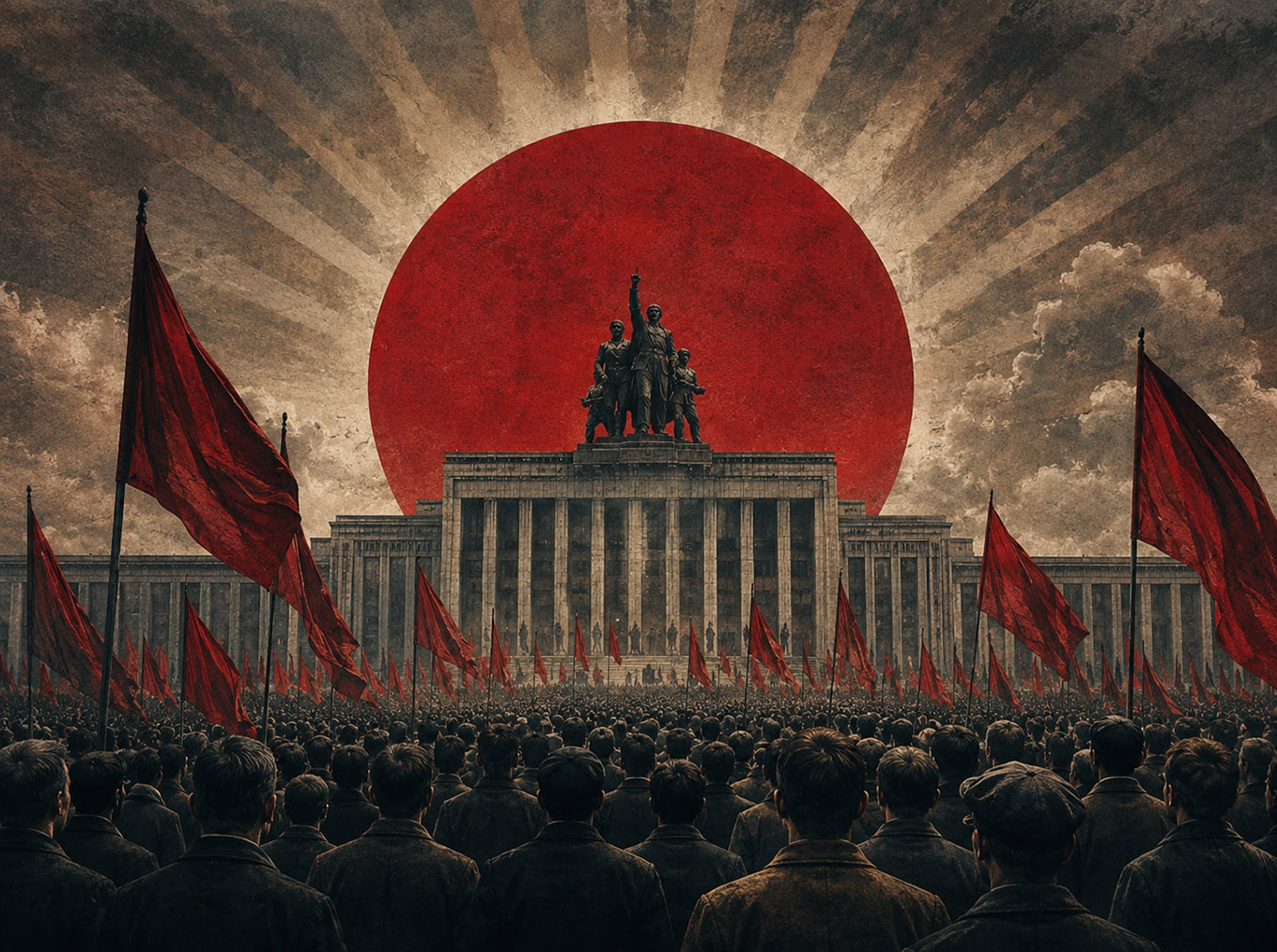
The Economy Isn't Healing. It's Being Medicated
Markets are near record highs. Politicians insist the economy is strong. Yet millions of young people feel further away from home ownership, financial security, and the future their parents took for granted. After my latest conversation with Gerald Celente, I found myself thinking less about inflation, AI, or even geopolitics, and more about where all of this is leading politically.
I was talking with Gerald Celente this week about something most investors already know, but too few are willing to follow to its political conclusion.
The rich are getting richer. The middle class is shrinking. Younger generations are being priced out of the basic milestones that once defined adulthood.
None of this is new.
What is new is what comes next.
When Asset Inflation Becomes Political
For the better part of two decades, policymakers have been able to paper over structural problems with cheap money, deficit spending, and asset inflation. Every time the economy stumbled, central banks stepped in. Every time markets cracked, governments found another way to support demand.
The result was a remarkable boom in financial assets. Stocks soared. Real estate exploded. Those who already owned assets became wealthier than they ever imagined. Those who didn't fell further behind.
The headlines today tell us the economy is somewhat healthy. Markets remain near record highs. Unemployment is relatively low. Politicians continue to assure us that inflation is under control and prosperity is around the corner.
Yet millions of people don't feel prosperous. Because the economy isn't a spreadsheet.
It's how people feel about their future.
For much of the post-war era, there was an implicit deal between citizens and the system. Work hard. Build skills. Buy a home. Raise a family. Gradually improve your standard of living.
That deal is breaking down.
In Canada, home ownership has become a distant dream for many young people. Across much of the Western world, real wages have struggled to keep pace with the cost of living. Household debt continues to climb. Family formation is slowing. Fertility rates are collapsing.
When people lose confidence in their future, they eventually lose confidence in the institutions that shape it. That's where things become political.
During our conversation, Gerald argued that we're entering a period of slowing economic growth combined with persistent inflationary pressure, a period he describes as "dragflation." Whether you agree with that specific term or not, it's difficult to ignore the broader trend. Economic growth feels weaker than advertised, while the cost of living remains stubbornly high.
And unlike previous economic cycles, this one is arriving alongside profound social frustration. You can see it everywhere.
Younger generations increasingly believe the system is working against them. Older generations increasingly struggle to understand why younger people seem so angry.
The divide isn't ideological. It's economic.
Those who own assets are generally doing fine. Those who don't are increasingly looking for alternatives, whether that be where they live, how they vote, or what they decide to protest.
The Housing Crisis Is Changing What Voters Expect
Which brings me to an announcement that caught my attention this week. Prime Minister Mark Carney and British Columbia Premier David Eby unveiled a multi-billion-dollar housing initiative that includes government support to purchase unsold condominium inventory and provide additional backing to housing projects. I'm not writing this to debate the merits of the policy. I don’t like bailouts.
What interests me, however, is what it represents.
Twenty years ago, the idea of governments stepping in to absorb unsold private-sector housing inventory would have been viewed as extraordinary. Today, it feels normal.
In fact, many people are asking why governments aren't doing more. That psychological shift matters.
Because it tells us something important about where public opinion is headed. When enough people feel locked out of the housing market, they stop asking for patience. They start asking for intervention.
When enough people believe they cannot get ahead through traditional means, they stop demanding opportunity. They start demanding assistance. And once that shift begins, it tends to accelerate.
The same pattern is emerging elsewhere.
Student debt relief.
Housing subsidies.
Industrial policy.
Government-backed infrastructure spending.
Strategic investment funds.
Market interventions.
These policies are often presented individually, each designed to solve a specific problem. But viewed collectively, they point toward a much larger trend. A growing belief that government should play a larger role in managing economic outcomes. This destroys the free market.
At the same time, artificial intelligence is introducing another layer of uncertainty. The largest technology companies in the world are spending hundreds of billions of dollars building AI infrastructure. Investors are being told this is the next industrial revolution.
Perhaps it is.
But even if AI delivers on every promise, it may also eliminate millions of jobs, compress wages in certain industries, and further concentrate wealth among those who own the platforms, data, and infrastructure.
If that happens, political pressure for redistribution will intensify. Not because people suddenly become socialists. Because they become frustrated. And frustration has always been one of the most powerful forces in politics.
The West’s Slow March Toward Socialism
This is why I increasingly believe the defining political trend of the next decade will be the gradual movement of Western democracies toward more socialist policies. Not through revolution. Not through some dramatic ideological awakening. But through a series of responses to economic realities.
One subsidy at a time.
One guarantee at a time.
One intervention at a time.
Each policy will be sold as a temporary solution to a specific problem.
But together they will represent a fundamental shift in how governments, voters, and markets interact.
That's why I think the biggest story over the next decade isn't gold. It isn't artificial intelligence. It isn't inflation. And it isn't even geopolitics.
Those are all important. But they are secondary to a much bigger question:
What happens when a generation loses faith that the existing system can deliver a better future?
Because if enough people answer that question with a "no," the political and economic landscape of the Western world will look dramatically different ten years from now than it does today.
Prepare for a wave of socialism in the West.

Latest Insights
Recent Highlights from Our YouTube Channel
Comprehensive reviews of current market dynamics and the latest trends influencing the future of investments.