The Venture Capital Boom Has a Resource Problem
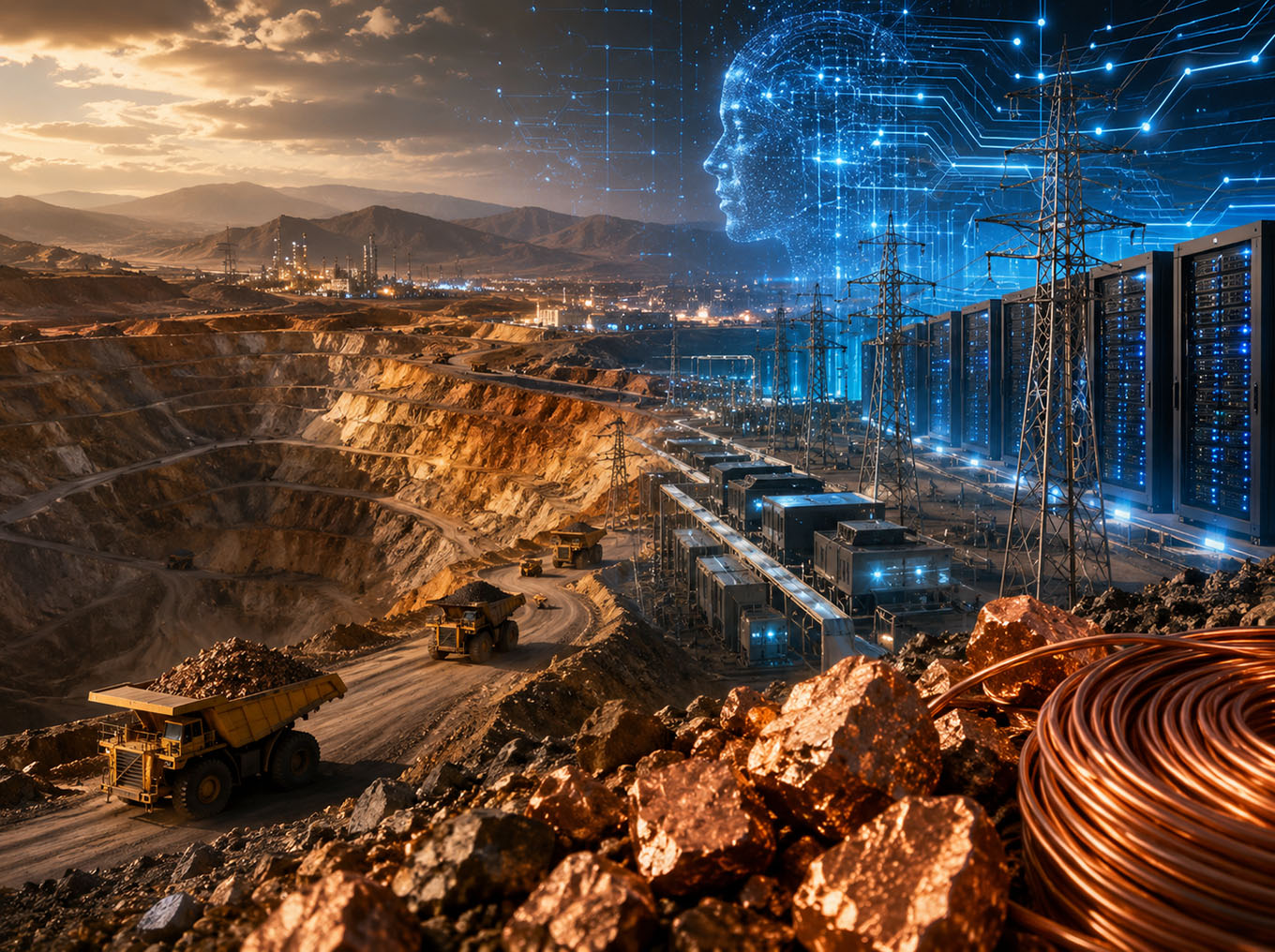
Venture capital is pouring hundreds of billions into AI, but the market may be ignoring the harder problem beneath the boom. Data centers need power, copper, critical minerals, transmission, and mines that cannot be built overnight.
Venture capital is back.
Global startup funding hit US$510 billion in the first half of 2026, according to Crunchbase. That is already more than the US$440 billion invested in all of 2025. Q2 alone saw US$205 billion poured into more than 5,000 startups, making it the second-largest quarter for global venture investment on record.
On paper, it looks great.
In reality, capital is not spreading across the startup world evenly. It is crowding into a very small number of companies. Crunchbase reports that OpenAI and Anthropic alone accounted for US$217 billion, or 43% of all global startup funding in the first half of 2026. In Q2, more than 70% of global startup capital went into AI-focused companies, and Anthropic alone raised US$65 billion last quarter.
That matters for resource investors, because the AI trade is no longer just a software trade.
AI Has A Mine Problem
The market is still talking about models, chips, valuations, productivity and which private company becomes the next trillion-dollar monster.
But underneath that story is a much older one. Power. Copper. Steel. Water. Cooling. Land. Permits. Transmission. Mines.
The International Energy Agency expects global data centre electricity consumption to roughly double from 485 TWh in 2025 to 950 TWh by 2030. That is a monstrous power system problem, and it turns AI from a Silicon Valley story into an infrastructure story.
Copper is the cleanest example.
S&P Global projects global copper demand will rise from 28 million metric tons in 2025 to 42 million metric tons by 2040, a 50% increase. The drivers for that demand are exactly where the world is spending money: AI, electrification, data centers, defense, robotics, grids and industrial reshoring. S&P also warned that without major gains in mining and recycling, copper supply could fall short by more than 10 million metric tons annually by 2040.
This is the part venture capital does not have an answer for.
A real mining project can take years just to permit, let alone finance, build, commission and operate. The timelines are brutal. The politics are messy. The capital requirements are enormous. And the market usually wants the metal long before the mine is ready.
That mismatch may become one of the great investment opportunities of this decade.
Governments Are Desperate for New Mines
Governments see it. Canada announced a second round of 30 critical minerals partnerships and investments earlier this year, aimed at unlocking $12.1 billion in mining project capital. Combined with the first round, Canada says the initiative is helping mobilize $18.5 billion in critical minerals projects.
Private capital sees it too. Orion Resource Partners closed a US$2.2 billion mine finance fund in March, focused on construction and acquisition financing for strategic metals and critical minerals projects.
Still, the bottleneck is not just money.
The World Economic Forum recently framed the problem bluntly: critical minerals projects need to be made bankable. In other words, investors need enough risk allocation, revenue certainty and delivery confidence to put serious capital to work.
That is the opportunity hiding inside the venture capital boom.
AI companies are being funded as if the physical world will simply keep up. It probably won’t.
Venture capital is funding the digital world at record speed. But the digital world still has to plug into the real one.

Latest Insights
Recent Highlights from Our YouTube Channel
Comprehensive reviews of current market dynamics and the latest trends influencing the future of investments.