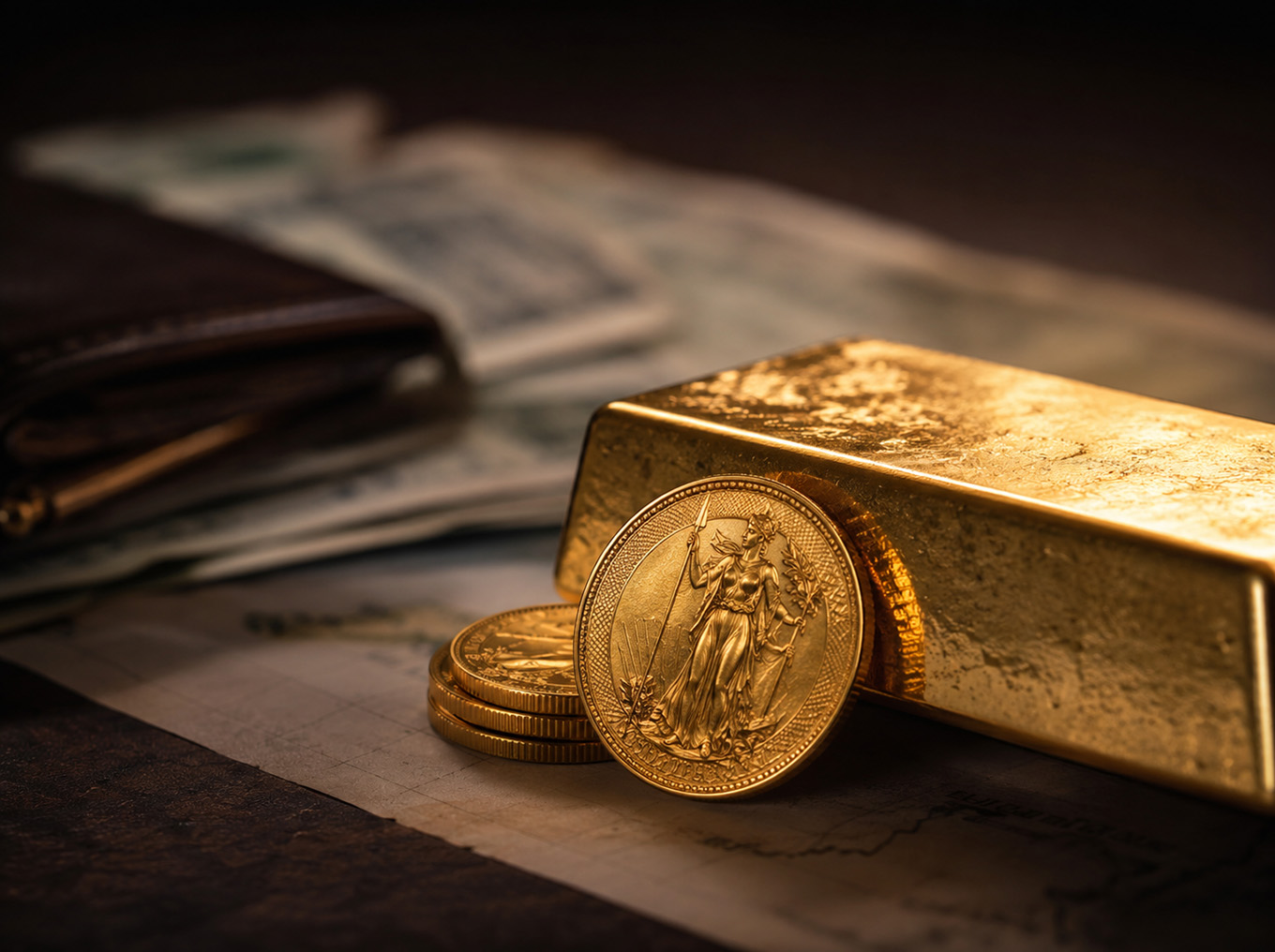
I’ve Owned Gold for 10 Years. I’m Only Now Understanding Why
Aaron Hoddinott has owned gold for more than a decade, but after interviewing Alasdair Macleod, he is reconsidering what gold really is. Not a trade. Not a hedge. Maybe not even an investment.
Governments print. Debt grows. Politicians promise what they can’t fund. Central banks panic, then call it policy. Fiat currencies get abused.
So you own gold.
That was my view.
Gold was insurance. A hedge. Protection from the people in charge doing what they always do.
But after interviewing Alasdair Macleod, I think I was missing the real reason for owning it.
Macleod doesn’t talk about gold like an investment. In fact, he explicitly says it is NOT an investment. He says gold is money.
That is not a small difference.
Understanding What Gold Really Is
Isn’t gold supposed to protect us from war, debt, inflation, and political stupidity?
Gold is supposed to make you feel safe. But when gold falls 20%, like it has since hitting an all-time high earlier this year, it does the opposite. It makes you question the whole thing, particularly if you view it as an investment.
I have owned gold for years. But I still watch the price. I still measure it in dollars. I still compare it to stocks, bonds, Bitcoin, real estate, AI, robotics, data centers, and whatever else is attracting capital.
That is the investor brain. Macleod said it is the wrong brain to use.
To him, gold doesn’t go up. The dollar goes down.
That sounds like a trivial word game, but it’s not.
If gold is an investment, we can argue about returns. Did it beat the Dow? Did it beat the S&P 500? Should you have owned Nvidia instead? But if gold is money, the question changes.
What are we measuring everything else against?
Because we measure our entire economic lives in fiat currency. Our homes. Our businesses. Our portfolios. Our income. Our retirement accounts. Our net worth. Everything gets priced back into dollars.
So when gold rises in dollar terms, we call it a gold bull market. That’s wrong.
Gold is not in a bull market at all. It’s just doing what it has always done: exposing the weakness of the currency around it. Put another way, 125 ounces of gold could have bought you an average home about 100 years ago. Today, 125 ounces of gold still pretty much buys you an average home in America.
Macleod defines gold’s run as a credit problem. A brewing credit crisis is in the cards, and gold is acting accordingly because it is real, time-tested money.
That’s the point that stuck with me.
Not because I want to sell everything and live in a cabin with canned food.
I own stocks. I own businesses. I believe in innovation. I think capital should be put to work. I am not rooting for collapse. But investors have become far too comfortable confusing credit expansion with wealth creation.
A bond is credit.
A bank deposit is credit.
Government debt is credit.
A lot of the stock market is credit dressed up as business value.
Margin. Leverage. Cheap money. Government deficits. Central bank liquidity. That has been the fuel for dollar-measured prosperity over the last fifty years.
Gold Is Real Money
Gold is not someone else’s promise. It’s not an IOU.
It doesn't need a borrower to pay. It does not need a CEO to execute. It doesn’t need a central bank to rescue it. It does not need a government to behave.
Gold is money. It’s scarce. It maintains purchasing power.
It also just sits there. That is why people, especially bankers whose livelihoods depend on credit expansion, mock it.
It’s also why it survives.
I didn’t buy gold because I was making a brilliant investment.
Maybe I just wanted real money.

Latest Insights
Recent Highlights from Our YouTube Channel
Comprehensive reviews of current market dynamics and the latest trends influencing the future of investments.